re, and achieve a sense of well-being that does not involve drugs, side-effects, or even much cost.

Biofeedback simply means that you are tracking some observable physiologic phenomenon—heart rate, skin temperature, blood pressure—and trying to consciously access control over it. One very successful method is that of bringing the beat-to-beat variation in heart rate into synchrony with the respiratory cycle. In day-to-day life, the heart beat is usually completely out of sync with respiration. Bring it into synchrony and interesting things happen: you experience a feeling of peace and calm, while many healthy phenomena develop.

A company called HeartMath has applied this principle through their personal computer-driven device that plugs into the USB port of your computer and monitors your heart rate with a device clipped on your earlobe. You then regulate breathing and follow the instructions provided and feedback is obtained on whether you are achieving synchrony, or what they call “coherence.” As the user becomes more effective in achieving coherence over time, positive physiological and emotional effects develop. HeartMath has been shown, for instance, to reduce systolic and diastolic blood pressure, morning cortisol levels (a stress hormone), and helps people deal with chronic pain. Downside of the HeartMath process: a $249 price tag for the earlobe-USB device.

But this is the age of emerging smartphone apps, including those applied to health. Smartphone apps are perfect for health monitoring. They are especially changing how we engage in biofeedback. An app called Breathe Sync is available that tracks heart rate using the camera’s flash on the phone. By tracking heart rate and providing visual instruction on breathing pattern, the program generates a Wellness Quotient, WQ, similar to HeartMath’s coherence scoring system. Difference: Breathe Sync is portable and a heck of a lot less costly. I paid $9.99, more than I’ve paid for any other mainstream smartphone application, but a bargain compared to the HeartMath device cost.

One glitch is that you need to not be running any other programs in the background, such as your GPS, else you will have pauses in the Breathe Sync program, negating the value of your WQ. Beyond this, the app functions reliably and can help you achieve the health goals of biofeedback with so much less hassle and greater effectiveness than the older methods.

If you are looking for a biofeedback system that provides advantage in gaining control over metabolic health, while also providing a wonderful method of relaxation, Breathe Sync, I believe, is the go-to app right now.

Amber’s Top 35 Health and Fitness Tips

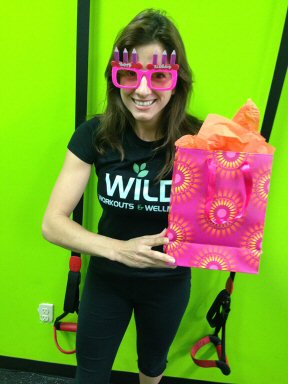
This year I joined the 35 club!  And in honor of being fabulous and 35, I want to share 35 health and fitness tips with you! 

1.  Foam rolling is for everyone and should be done daily. 
2.  Cold showers are the best way to wake up and burn more body fat. 
3.  Stop locking your knees.  This will lead to lower back pain. 
4.  Avoid eating gluten at all costs. 
5.  Breath deep so that you can feel the sides or your lower back expand. 
6.  Swing a kettlebell for a stronger and great looking backside. 
7.  Fat is where it’s at!  Enjoy butter, ghee, coconut oil, palm oil, duck fat and many other fabulous saturated fats. 
8.  Don’t let your grip strength fade with age.  Farmer carries, kettlebells and hanging from a bar will help with that. 
9.  Runners, keep your long runs slow and easy and keep your interval runs hard.  Don’t fall in the chronic cardio range. 
10.  Drink high quality spring or reverse osmosis water. 
11.  Use high quality sea salt season food and as a mineral supplement. 
12.  Work your squat so that your butt can get down to the ground.  Can you sit in this position? How long?
13.  Lift heavy weights!  We were made for manual work,.   Simulate heavy labor in the weight room. 
14.  Meditate daily.  If you don’t go within, you will go with out.  We need quiet restorative time to balance the stress in our life. 
15.  Stand up and move for 10 minutes for every hour your sit at your computer. 
16. Eat a variety of whole, real foods. 
17.  Sleep 7 to 9 hours every night. 
18.  Pull ups are my favorite exercise.  Get a home pull up bar to practice. 
19.  Get out and spend a few minutes in nature.  Appreciate the world around you while taking in fresh air and natural beauty. 
20.  We all need to pull more in our workouts.  Add more pulling movements horizontally and vertically. 
21. Surround yourself with health minded people. 
22. Keep your room dark for deep sound sleep.  A sleep mask is great for that! 
23. Use chemical free cosmetics.  Your skin is the largest organ of your body and all chemicals will absorb into your blood stream. 
24. Unilateral movements will help improve symmetrical strength. 
25. Become more playful.  We take life too seriously, becoming stress and overwhelmed.  How can you play, smile and laugh more often?
26.  Choose foods that have one ingredient.  Keep your diet simple and clean. 
27.  Keep your joints mobile as you age.  Do exercises that take joints through a full range of motion. 
28. Go to sleep no later than 10:30pm.  This allows your body and brain to repair through the night. 
29. Take care of your health and needs before others.  This allows you to be the best spouse, parent, coworker, and person on the planet. 
30.  Always start your daily with a high fat, high protein meal.  This will encourage less sugar cravings later in the day. 
31. Approach the day with positive thinking!  Stinkin’ thinkin’ only leads to more stress and frustration. 
32. You are never “too old” to do something.  Stay young at heart and keep fitness a priority as the years go by. 
33. Dream big and go for it. 
34.  Lift weights 2 to 4 times every week.  Strong is the new sexy. 
35.  Love.  Love yourself unconditionally.  Love your life and live it to the fullest.  Love others compassionately. 

Amber B.
Cureality Exercise and Fitness Coach

To Change, You Need to Get Uncomfortable

Sitting on the couch is comfortable.  Going through the drive thru to pick up dinner is comfortable.  But when you notice that you’re out-of-shape, tired, sick and your clothes no longer fit, you realize that what makes you comfortable is not in align with what would make you happy.   

You want to see something different when you look in the mirror.  You want to fit into a certain size of jeans or just experience your day with more energy and excitement.  The current condition of your life causes you pain, be it physical, mental or emotional.  To escape the pain you are feeling, you know that you need to make changes to your habits that keep you stuck in your current state.  But why is it so hard to make the changes you know that will help you achieve what you want?  

I want to lose weight but….

I want a six pack but…

I want more energy but….

The statement that follows the “but” is often a situation or habit you are comfortable with.  You want to lose weight but don’t have time to cook healthy meals.  So it’s much more comfortable to go through the drive thru instead of trying some new recipes.   New habits often require a learning curve and a bit of extra time in the beginning.  It also takes courage and energy to establish new routines or seek out help.  

Setting out to achieve your goals requires change.  Making changes to establish new habits that support your goals and dreams can be uncomfortable.  Life, as you know it, will be different.  Knowing that fact can be scary, but so can staying in your current condition.  So I’m asking you to take a risk and get uncomfortable so that you can achieve your goals.  

Realize that it takes 21 days to develop a new habit.  I believe it takes triple that amount of time to really make a new habit stick for the long haul.  So for 21 days, you’ll experience some discomfort while you make changes to your old routine and habits.  Depending on what you are changing, discomfort could mean feeling tired, moody, or even withdrawal symptoms.  However, the longer you stick to your new habits the less uncomfortable you start to feel.  The first week is always the worst, but then it gets easier.

Making it through the uncomfortable times requires staying focused on your goals and not caving to your immediate feelings or desires.  I encourage clients to focus on why their goals important to them.  This reason or burning desire to change will help when old habits, cravings, or situations call you back to your old ways.
Use a tracking and a reward system to stay on track.  Grab a calendar, journal or index card to check off or note your daily successes.  Shoot for consistency and not perfection when trying to make changes.  I encourage my clients to use the 90/10 principle of change and apply that to their goal tracking system.  New clothes, a massage, or a day me-retreat are just a few examples of rewards you can use to sticking to your tracking system.  Pick something that really gets you excited.  

Getting support system in place can help you feel more comfortable with being uncomfortable.  Hiring a coach, joining an online support group, or recruiting family and friends can be very helpful when making big changes.  With a support system in place you are not alone in your discomfort.  You’re network is there for you to reach out for help, knowledge, accountability or camaraderie when you feel frustrated and isolated.  

I’ve helped hundreds of people change their bodies, health and lives of the eleven years I’ve worked as a trainer and coach.  I know it’s hard, but I also know that if they can do it, so can you.  You just need to step outside of your comfort zone and take a risk. Don’t let fear create uncomfortable feelings that keep you stuck in your old ways.  Take that first step and enjoy the journey of reaching your goals and dreams.  

Amber Budahn, B.S., CSCS, ACE PT, USATF 1, CHEK HLC 1, REIKI 1
Cureality Exercise Specialist

The 3 Best Grain Free Food Swaps to Boost Fat Burning

You can join others enjoying substantial improvements in their health, energy and pant size by making a few key, delicious substitutions to your eating habits.  This is possible with the Cureality nutrition approach, which rejects the idea that grains should form the cornerstone of the human diet.  

Grain products, which are seeds of grasses, are incompatible with human digestion.  Contrary to what we have been told for years, eating healthy whole grain is not the answer to whittle away our waists.  Consumption of all grain-based carbohydrates results in increased production of the fat storage hormone insulin.  Increased insulin levels create the perfect recipe for weight gain. By swapping out high carbohydrate grain foods that cause spikes in insulin with much lower carbohydrate foods, insulin relea All posts by william-davis
Vitamin D--A coronary risk factor

Look up "coronary risk factors" in any text and you'll find high cholesterol, smoking, diabetes, and high blood pressure listed. You won't find deficiency of vitamin D listed.

Ask 99% of physicians if a deficiency of vitamin D is a coronary risk factor and you'll get rolling eyes and a sigh.

Yet, in the Track Your Plaque experience, vitamin D is emerging as a very important factor in coronary plaque development. We have observed that there are a substantial number of people whose lipids and lipoproteins are not abnormal enough to fully explain their heart scan score. In other words, there seems to be something else necessary to satisfactorily explain the magnitude of coronary plaque.

I believe that severe vitamin D deficiency is at least one of the most important factors. We've seen many people with blood levels of vitamin in the range of severe deficiency (<20 ng/ml of 25-OH-Vitamin D3) yet bland lipids and lipoproteins.

Correcting vitamin D blood levels to 50 ng/ml also seems to be among the required factors in stopping coronary plaque growth, or stopping your heart scan score from increasing.

Keep your eye on this extremely important and exciting issue. Sadly, it won't be propelled into the media like the conversation about cholesterol or high-tech procedures, since no company stands to profit from it. But you and I don't have to play that game.

Cholesterol is dead!

I saw a patient in the office yesterday. He came to me for an opinion regarding his high heart scan score of 525, putting him in the 90th percentile (5% annual risk of heart attack).

His doctor had been puzzled because his LDL cholesterols had ranged from 110 to 131 mg--actually below average. (The average LDL for the U.S. is 132 mg.) Likewise, HDL was a favorable 63 mg.

Lipoprotein analysis told the story loud and clear. His LDL particle number, a far more precise measure of LDL, was 2448 nmol/l. This means that his true LDL was more like 240-250 mg! (You can get a sense for what the true LDL is from LDL particle number by dropping the last digit: 2448 becomes 244.) Conventional LDL was therefore inaccurate by over 100 mg.

He also had a severe small LDL particle pattern. The cause of his coronary plaque was a large excess of small LDL particles. LDL cholesterol (and total cholesterol, likewise) didn't even hint at this pattern. Nor did his favorable HDL.

Think of LDL particle number as an actual count of LDL particles per volume, e.g., number of particles per cc of blood. This makes it easier to conceptualize. LDL particle number is the measure you get when you have an NMR lipoprotein profile, our preferred method of lipoprotein testing. If this is unavailable to you, apoprotein B is a reasonable second choice, though not as accurate in my view. More info on NMR is available at their website, www.lipoprofile.com.

How to make a $1 million in cardiology

Want to make a $1,000,000 as a cardiologist in the next year? It's easy. All you have to do is:

1) Perform heart catheterizations or other procedures on anybody you can, even if it's not necessary. Perform them even if the patient has no symptoms and the stress test is normal.

2) Perform heart catheterizations if the patient is too timid or ill-informed to object.

3) Insert coronary stents in blockages, even when they're minor and it's not necessary.

4) Turn every heart procedure into a revenue-producing stream by looking for other profit opportunties, such as minor kidney artery blockages.

5) Heart disease is frightening. Scare the heck out of patients by exagerrating the dangers so they'll go through testing and procedures gratefully.


Sound absurd? Well, it would be if these weren't all true.

These are real examples, as awful as it sounds. I've witnessed all these behaviors. Not just occasionally, but with regularity.

Just today, I encountered a colleague who performs heart catheterizations routinely (up to several per day) when any symptom is present and the stress test is entirely normal. This is grossly inappropriate.

Your protection is being better-informed and avoid being sucked into the vast and frightening cardiovascular machine of revenue-yielding procedures. Part of your protection is to get a CT heart scan, then engage in a program of heart disease prevention.

Doctor, do I have lipoprotein (a)?

I met Joyce today for a 2nd opinion. She told me about this conversation she'd had with her cardiologist:

"Doctor, do you think I could have lipoprotein (a)? I read about how it can cause heart attacks even when cholesterol is controlled."

"What does it matter? Even if you have it, there's nothing we can do about it. There's no treatment for it."

Joyce was understandably groping for some means to prevent her coronary disease from causing more danger. At 56, she'd already survived a heart attack that resulted in two stents to her left anterior descending. Around 9 months later, she received a 3rd stent to another artery.

Her doctor had put her on Pravachol and said that was enough. "We know that cholesterol causes heart disease and the Pravachol reduces it. Why do we need to know anything more?"

So Joyce came to me for another view. I explained to her that there are, in fact, several ways to deal with lipoprotein(a). It is, without a doubt, among the more difficult patterns to manage--but not impossible. In fact, we have a growing list of participants in the Track Your Plaque program who have stopped or reduced their heart scan scores.

I continue to be horrified at the level of ignorance that prevails among my colleagues, the cardiologists, and the primary care community. If your doctor gives you advice like this, get a new doctor.

Is it mainstream or alternative?

A question I get about once a week: "Is your program a kind of alternative medicine?"

Our program for control and reversal of coronary plaque using CT heart scans applies an eclectic panel of tools to achieve its goals. We use high-tech methods like lipoprotein analysis and CT heart scans; nutritional supplements like fish oil, vitamin D, and l-arginine; diet strategies and "functional foods" (using foods as a therapeutic tool); and conventional medication.

I don't consider this approach "alternative" in the sense that it uses unmeasurable or spiritual strategies. But I don't consider it mainstream, either, since current mainstream practice of heart disease prevention is far less rigorous with far less satisfactory results.

I think I can sum up the Track Your Plaque approach by saying that we use tools that work. Our measure of success is whether or not your heart scan score is stopped or reduced--that's hard to fudge. You can call it what you will, but I call it the best program for heart disease prevention I know of, alternative or mainstream.

Want to see someone turn diabetic?

If you want to witness the transformation of someone into a pre-diabetic or diabetic, put them on a low fat diet.

Dr. Dean Ornish's program, detailed in his books, Dr. Dean Ornish's Program for Reversal of Heart Disease and Eat More, Weigh Less , are woefully outdated in 2006. Yet the low fat notion continues to show up in the consciousness of people I talk to about heart disease reversal.

"I'm already on a low fat diet. Do you think my heart scan score has reversed?"

Highly unlikely. What Dr. Ornish (as a non-cardiologist, by the way) failed to recognize is that what he did manage to reverse in a small number of people is something called "endothelial dysfunction", but he did not reverse or shrink coronary plaque.

Given the limitations of technology when the Ornish concept got its start, it appeared as if reversal was obtained. In reality, all his approach accomplished was a relaxation in tone of abnormally constricted arteries, thus giving the appearance of reversal. Increased artery tone, or endothelial dysfunction, is extremely common when atherosclerotic plaque is present.

Any cardiologist will tell you that there are many ways to reverse endothelial dysfunction: exercise, weight loss, cholesterol drugs, drugs for high blood pressure, fish oil, hormonal therapy, vitamin C, l-arginine, etc. There is nothing special about a low fat diet.

In fact, Track Your Plaque followers will recognize that a low fat diet is, in fact, potentially harmful, particularly when low HDL or small LDL is part of your pattern.

Let's bury the outdated ideas of the Ornish low fat diet once and for all. It doesn't work. All it may do is confuse you and set you back from your real coronary plaque reversal program.

Inulin: A fiber for weight loss

Here's an interesting product that seems to be gaining some popularity for weight loss: Inulin.

Not to be confused with "insulin", with which it is completely unrelated, inulin is a naturally-occurring plant fiber. It's found in broccoli, asparagus, celery, etc. Like beta-glucan from oats or pectin, inulin is a so-called soluble fiber, a fiber that assumes a gel-like consistency when exposed to water.

Inulin has the effect of increasing satiety, or the sensation of fullness. This cuts your craving for foods. I've tried it recently and I prefer it over glucomannan, another soluble fiber for satiety.

The people at Stonyfield Farms have been adding inulin to their yogurts from some time. The nutritionist at the company tells me that there's 2-3 grams of inulin per 6 ounce container of their yogurt.

You can also find inulin as a supplement that you can add to foods, available from some health food stores and online supplement companies. I came across a neat product called Fiber Choice that's now being distributed widely throughout the U.S. I tried their Weight Management version. It was a delicous strawberry taste. The label says take two chewable tablets twice a day, but I found that two tablets three times a day somewhat better. It's best taken around 30-60 minutes prior to each meal and it causes you to be fuller with less food. One caution: It'll cause loads of gas, especially in the beginning. For that reason, you might try starting with a smaller dose, or start on the weekends when you have the option of some privacy!

More info on the Fiber Choice product can be found at their website, http://www.fiberchoice.com.

Disclaimer: I have no relationship with the manufacturer of this product. I'm simply passing on some thoughts on my experience with this interesting possibility for weight loss.

Will you recognize the truth when you see it?

Do you ever wonder that, if the truth were given to you, that you'd recognize it as such? Or would you dismiss it as just another bunch of nonsense?

After all, you and I live in the Information Age. It means that we have access to mountains of information like never before in human history. But it also means that the truth is often drowned out by an avalanche of mis-truths, sales pitches and marketing, and just plain nonsense.

This struck me the other day when I was talking to a patient.

64 years old with a high heart scan score placing her at significant risk, she looked confused. I'd just described the multitude of causes of coronary plaque that we'd uncovered. The heart scan alone had been a shocker.

"I don't understand. My doctor told me that I had nothing to worry about. I've known him for years and he knows me really well. He did a stress test. That was fine. I don't get all this other stuff you're telling me--lipoprotein whatever..."

Despite my efforts to help her gain an understanding of our intensive approach, she just became increasingly more frustrated. "I just don't think I can do this."

That's the last I've heard from her. As far as I know, she's returned to the comfort of her family doctor who has reassured her over the years. And perhaps there's some good in that. But I do fear for the day when, unexpectedly, she suffers some catastrophe that we told her was coming sooner or later unless real preventive efforts were started.

You could say that she failed to recognize the truth when it was given to her-- boldly, unadorned, and with far greater scientific certainty than the casual reassurances she was accustomed to. But, unfortunately, that's all that some people want.

Don't neglect the basics in your heart disease reversal program

Carl loved new ideas and novel approaches. You could tell by the sheer number of nutritional supplements he took. His list had grown to 18 different supplements over the past two years.

Carl came to me for coronary plaque regression. Lipoprotein analysis did uncover several previously unsuspected abnormalties, most notably small LDL particles and lipoprotein(a). In addition, Carl's LDL cholesterol ranged between 111 mg-156 mg and he was clearly hypertensive, with systolic blood pressures consistently around 150-160. (Recall that people with Lp(a) are more prone to hypertension.)

Carl was more than willing to have his lipoprotein(a) reduced. We did so with niacin and testosterone and the level dropped to near zero. Likewise, we corrected his small LDL pattern with niacin, fish oil, and a reduction in processed carbohydrates.

But Carl really resisted doing much about his LDL cholesterol and high blood pressure. I got the sense that these "boring" issues simply didn't interest him. After all, LDL cholesterol and blood pressure were the stuff of TV commercials and the popular conversation propagated by drug companies.

Carl's follow-up heart scan, however, finally persuaded him: a 24% increase in one year, likely due to the neglect of the basic issues.

I liken Carl's case to being like the teenager with a new car who polishes the paint to a bright finish, puts new wheels and tires on it, spruces up the interior with various doodads--but then fails to change the oil. Sometimes it's the most basic issues that can diminish your success.

Issues like LDL cholesterol and high blood pressure aren't the most glamorous, but they do count in your coronary plaque control program.

Is your doctor a hospital employee?

There's a disturbing trend that's growing--silently but rapidly.

In Milwaukee, three hospital systems compete for the local health care dollar. To gain more control over revenues and the routing of patients, the hospitals are aggressively hiring physicians to work for them. I've witnessed many of my cardiology colleagues, primary care doctors, and a substantial number of procedural specialists enticed by the offers made by hospital employers.

This phenomenon is not unique to Milwaukee but is being used in many, perhaps most, major cities in the U.S.

This means that physicians are employees of the hospital. That way, employee-physicians are obliged to use only the hospital system that employs them. In the old days, your doctor could use any hospital he/she desired, depending on the quality, location, facilities, etc. Now, many physician-employees are given no choice but to use the hospital that pays their salary.

That by itself is not necessarily bad. But combine salary with incentives for bringing in patients for hospitalization and procedures--that the rub. In other words, physician-employees are incentivized to generate more revenue for the system, just as employees in many other industries.

If you're a salesman for an insurance company, your job is to bring in more business. If you're a worker on an auto production line, you're expected to meet certain quotas. These same principles are now being applied to many physicians.

How does this affect you? Well, if your physician--especially procedure-driven specialists like cardiologists, general surgeons, orthopedists, etc.--is a hospital employee, BEWARE! Do you really need that procedure, or is your doctor suggesting you have a procedure because it will add to his track record?

Prevention? In this model of health care, why bother? It certainly doesn't pay for a hospital to keep you well. Then why should your physician-employee?

Be careful who you're dealing with. If your physician is a hospital-employee, don't bet on getting preventive care. It's more likely you're that just a future source of revenue when it's time for your bypass operation, hip replacement, carotid endarterectomy, etc.

What more powerful argument is there for increased self-empowerment and information for health care consumers?

Copyright © 2026 Cureality.com